
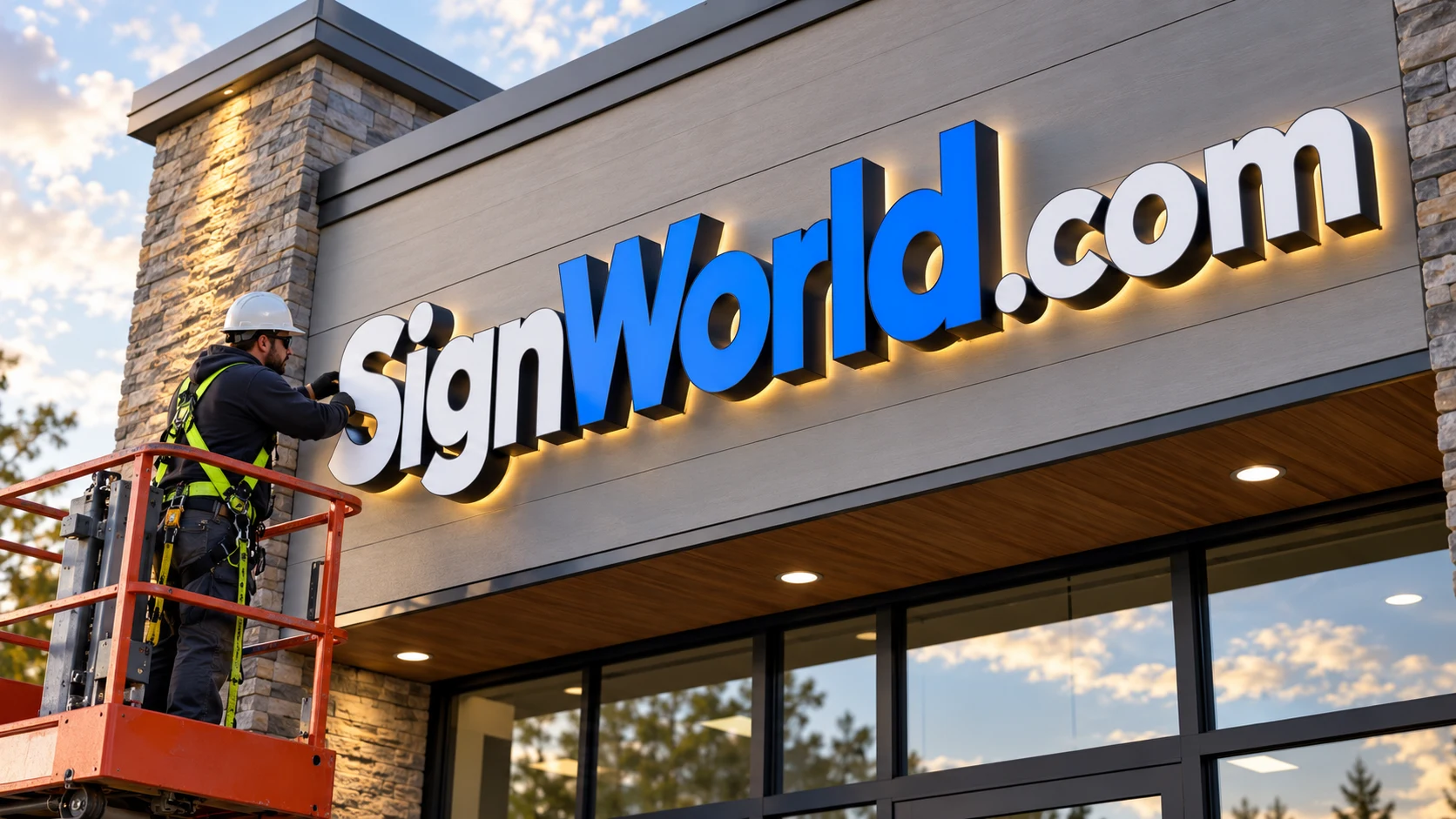
A company opening several locations has a coordination problem before it has a sign problem. Each property has a different frontage, approval path and installation schedule. The brand team wants a consistent result, while the local people need drawings and decisions that fit the site. A business under SignWorld.com could serve that gap by taking responsibility for a defined package across a manageable network. This is a possible business direction for a future owner, rather than an operating service offered here.
Choose the first customer carefully
I would start with an organization that has recurring locations and a relatively consistent sign family. A small retail group, a professional services network or a regional operator could be easier to understand than every kind of commercial property at once. The initial customer should have enough recurring work to justify a repeatable process, but a pilot should stay small enough that the team can check every handoff personally.
The first promise needs to be specific. For example, the company might coordinate a wall sign and entrance graphics for a group of comparable leased premises. That is a service a buyer can describe and compare. A general promise to manage all signs everywhere makes it harder to establish what the team is responsible for and what local specialists must still do. The initial scope should identify the sign categories, region and project responsibilities explicitly.
Sell a clear chain of responsibility
The offer could include an initial site survey, a coordinated drawing set, a record of approvals, fabrication management and installation scheduling. Those activities need named owners. The customer should know who checks dimensions, who submits the relevant applications and who confirms that the installed work matches the approved drawings. A single contact is useful only when that contact can get reliable answers from the people doing the work.
Local conditions deserve attention before a standard package is repeated. A mounting method that works on one frontage may not suit another. A landlord's design criteria may change the permitted appearance. Public authority requirements also vary. For a concrete example, New York City's business sign guidance distinguishes rules about construction from rules about appearance. A national process needs a way to capture such local information instead of treating one approval as reusable everywhere.
Build the partner network around the work
The network should begin with demonstrated capabilities for the chosen package. Ask potential partners for relevant completed work, the service area they can actually cover and a clear explanation of who handles each stage. A manufacturer that ships a product is different from an installer who surveys a building and mounts it. The coordination business should make those distinctions visible in its internal records and its customer scope.
For illuminated work, the team should establish how product certification, electrical coordination and inspection requirements will be addressed. UL Solutions describes electric sign certification and component services, including the UL 48 standard. That provides a useful starting point for questions to a qualified supplier. It does not replace reviewing the particular product and local installation requirements with the people responsible for them.
Make the project record the product
A shared project record can be a practical differentiator. It might hold the approved logo file, survey photographs, final dimensions, landlord comments, signed artwork and installation notes. The purpose is to reduce ambiguity. A site manager should not have to search an email chain to discover which drawing was approved. A fabricator should be able to see when a revision changes a dimension or material.
The first version does not need ambitious software. A disciplined folder structure, a clear revision convention and a short status report may be enough to test the service. AI could help summarize correspondence or organize documents, with human checks before a technical decision is relied on. The founder should learn which repeated steps genuinely cause delay before building a custom platform around them.
Find demand through a repeatable buying event
A useful route to market is the next opening, refurbishment or rebrand. Outreach can be built around that event and the people already coordinating it. Property consultants, fit-out contractors and brand teams could be relevant referral relationships. The pitch should explain what becomes easier for the customer: one agreed project record, fewer uncertain handoffs and clearer responsibility for the defined sign package.
A pilot can be measured without exaggerated claims. Record how often survey information was missing, where approval revisions occurred and which handoffs required clarification. Ask the customer what they had to chase. Then compare the effort of the next project using the improved process. The result should inform pricing and scope before expanding geography. Revenue alone would not reveal whether the operation is becoming more dependable.
A sensible first version
The first launch could be one region, one customer segment and a small group of partners with complementary roles. Publish a sample project sequence and a plain explanation of what is included. Keep an exceptions list for unusual structures, specialist access or work outside the agreed category. That makes the offer more credible and helps the team recognize a project it should refer elsewhere.
SignWorld.com could become the shared customer destination for that model. Its broad category identity gives room to expand once the operating process works. The next step would be to define a pilot brief, interview a few recurring buyers and map one real project from initial request to handover. A name can make the business easier to recognize. A dependable process gives customers a reason to remember it.