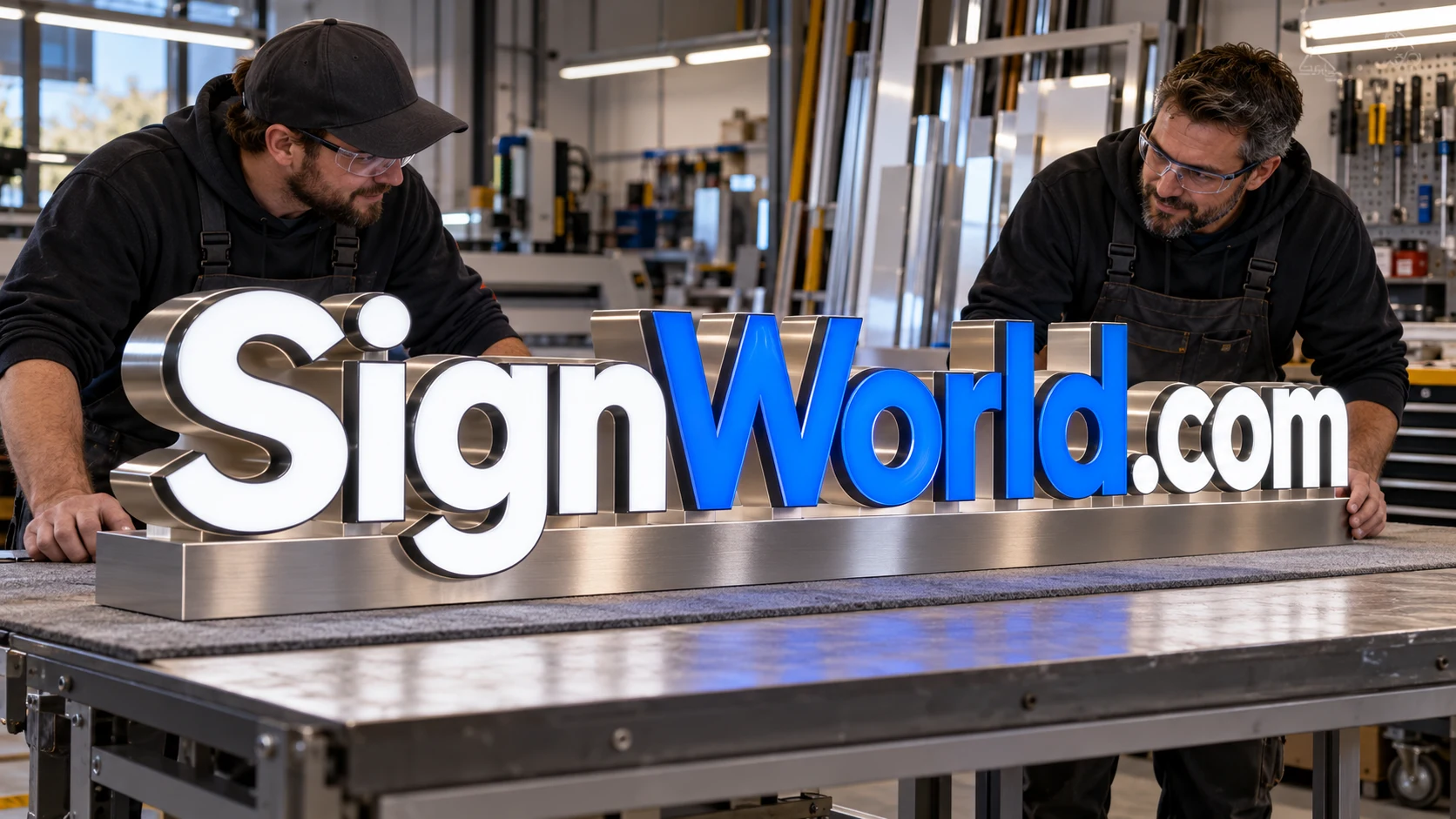
A buyer who asks for a new sign may mean a set of illuminated letters, a temporary graphic or a freestanding structure. A fabricator needs more detail before deciding whether the job fits its workshop. A marketplace under SignWorld.com could help both sides reach a useful first conversation. The opportunity would be to organize project information and relevant capabilities, then learn where those introductions create value. This is an illustrative direction for a future owner.
Begin with one kind of project
I would choose a category with a recognizable buying brief and enough variation to make matching useful. Dimensional interior lettering could be one test; storefront channel letters could be another. They should not be treated as interchangeable at launch. Each has different site information and production questions. A narrow category lets the marketplace explain what the buyer needs to provide and assess whether participating makers can respond consistently.
The first audience could be designers or property teams that buy occasionally and need help translating an idea into a request. Frequent professional buyers may already have strong supplier relationships. Occasional buyers may need more education but can benefit from a clearer process. Interviews should establish which group has a real matching problem, what they currently do and where a new service would save effort.
Make the brief useful to a workshop
A structured request could ask for a location, intended viewing position, approximate dimensions, artwork, installation needs and photographs of the surface. It should distinguish an estimated dimension from a verified site measurement. The buyer might not know the material or mounting method yet. That uncertainty belongs in the request so a fabricator can explain what must be established before a firm proposal.
For a technical category, use the supplier's own documentation to shape the questions. Gemini's fabricated letter guide illustrates how fabrication options and illumination details vary by product. A marketplace should avoid flattening those choices into a universal specification. Its job can be to identify the questions that need a qualified answer, while keeping the customer from choosing a product based only on a small photograph.
Show capabilities with evidence
A useful maker profile would describe the categories produced, relevant materials, typical service territory and whether site installation is offered directly or through others. Completed project examples should say what the maker actually supplied. A company that produced letters for a photographed project should not automatically be credited with the design, structure and installation. Clear attribution helps buyers judge fit and gives specialists a fair way to present their work.
Qualification can also include how the business handles drawings, revisions, packaging and aftercare. Some checks may be documentary, while others require a direct conversation or reference. The marketplace should publish exactly what its own verification means. A badge that sounds comprehensive while proving little would weaken trust. Claims about insurance, licensing or certification need scope and a way to keep records current.
Keep comparison fair
Three quotes are difficult to compare when one includes installation, another includes shipping only and the third assumes the customer will arrange power. The service could produce a scope comparison with the supplier's confirmation. Useful fields include product specification, design responsibility, site work, approvals, installation, exclusions and the point at which the price becomes firm. A cheaper headline should not hide a different job.
Electrical products introduce additional questions. UL Solutions' electric sign information can help a buyer understand that product certification is a specific subject to raise. The marketplace should record the manufacturer's answer for the quoted product and direct site-specific questions to qualified professionals. It should not imply that joining the directory establishes compliance for every project a maker accepts.
Design the commercial relationship openly
The founder needs to decide whether the service sells qualified introductions, charges for project coordination or takes a disclosed transaction fee. Each model changes the work required. A lead service needs clear criteria for a useful request. A coordination service needs staff and responsibility boundaries. A transaction model needs a carefully considered process for payments, changes and disagreements. Those questions should be resolved before advertising a comprehensive managed experience.
Both sides need to understand the incentives. If a supplier pays for placement, the ranking should not masquerade as an independent recommendation. If buyers pay for help, the service should explain what that help includes. At the pilot stage, a transparent manual process may reveal more than an elaborate automated ranking. The aim is to learn why one match works and another fails.
Earn the first visits
Practical category guides can attract buyers while improving their briefs. A guide could explain what photographs to take, what a proposal should clarify and why the same artwork may need adaptation for different materials. Makers could contribute attributed examples of constraints they encounter. The content should answer a buyer's question rather than turn every page into a request for contact details.
For supply, a small group of responsive specialists is more useful than hundreds of empty profiles. Ask them to review the request form and flag questions that would prevent a meaningful estimate. Track the share of requests that receive relevant responses and the reasons a maker declines. These observations can guide the next category, the supplier mix and the service model.
Test the matching before expanding
A first version could consist of a strong landing page, a carefully designed brief and manual introductions to a small vetted group. Interview both sides after each introduction. Look for missing information, mismatched expectations and avoidable repetition. Improve the brief before adding more automation. SignWorld.com could give the marketplace a broad public identity while the actual offer begins in one practical corner of the category. The next step is to select that corner and prove that better information leads to better conversations.